
Traditions of Obon (お盆祭)
Obon (お盆祭) is a traditional Buddhist event, also called the Gathering of Joy, which has been practiced in Japan for over 500 years. It blends Buddhist and Shinto customs and is intended to celebrate and connect with our ancestors as they return for a short visit from the afterlife.
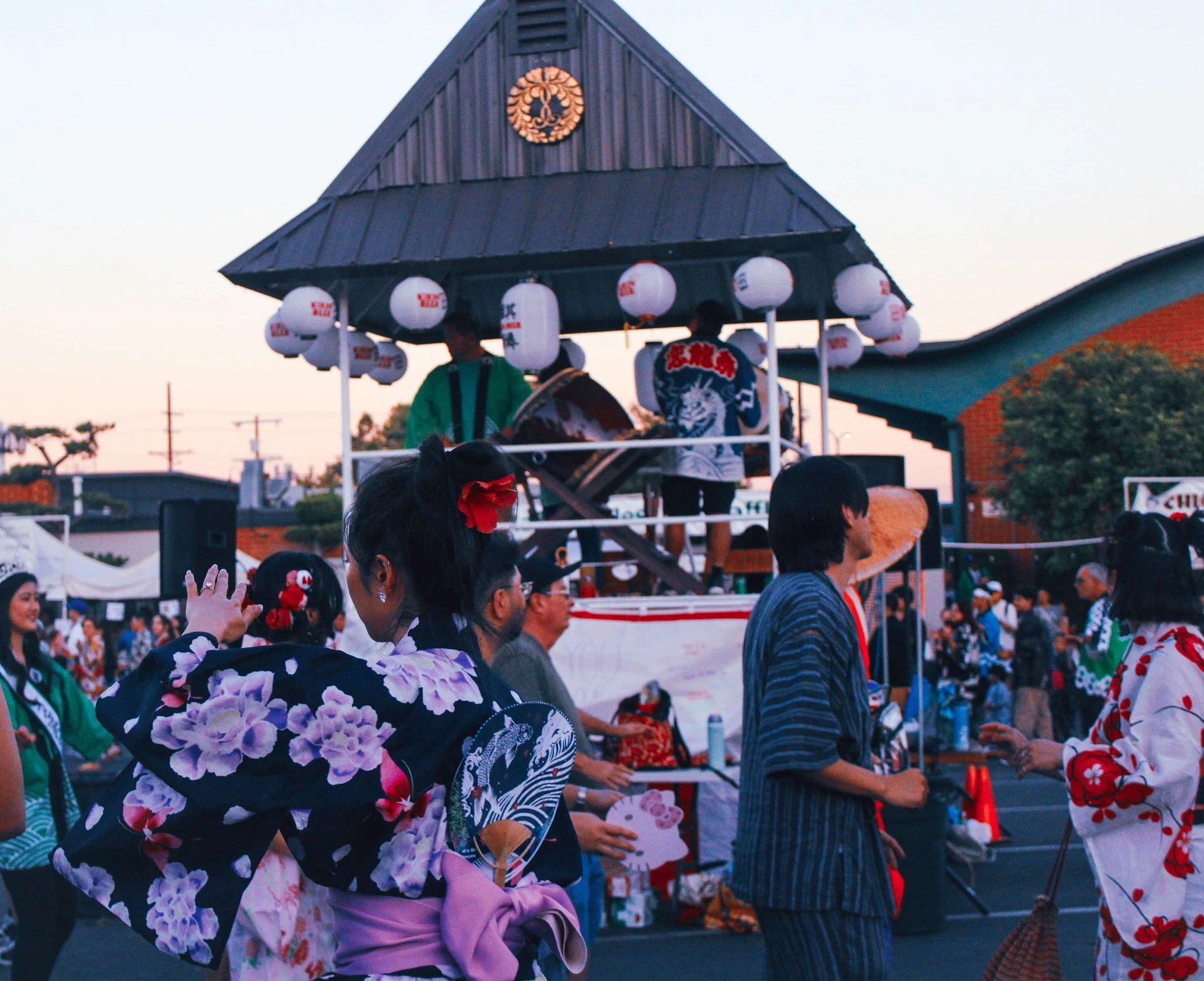
Come to Obon and dance!
The origin story of Obon is that of Buddhist disciple Mokuren who gazed upon the spirit of his late mother as she starved in the Realm of Hungry Ghosts. The Buddha then told his highly-distressed disciple to make offerings on the 15th day of the 7th month to Buddhist monks and, in so doing, free his ancestor from her suffering. Mokuren did so, and thus assured his mother’s freedom in the Pure Land; he then danced with joy and gratitude.
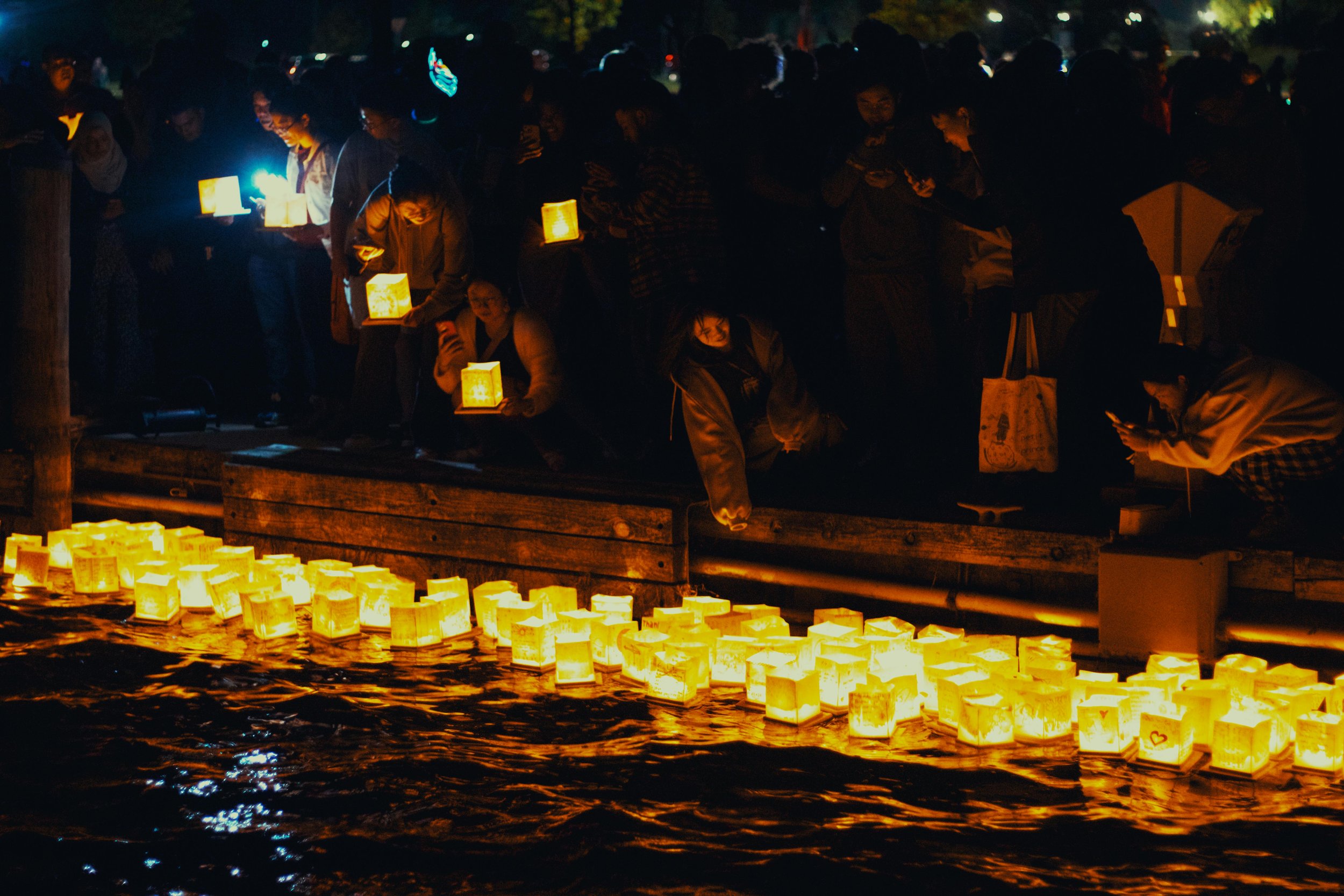
Photo by Destiny Photography
There are many Obon traditions in Japan that vary widely by region but, according to the Seattle Betsuin Temple, it’s common for families to visit gravesites to tidy them and place fresh flowers and fruit. It is a quiet way to reconnect with their loved ones before going to temple services and enjoying the matsuri (festival). Some families send small paper boats out to sea, while others leave out cucumber “horses” and eggplant “cows” on which the spirits may ride home to their families. Other families may leave out lanterns with the family crest to light the spirit’s path home. Obon has many traditions, but at its core, it is a blending of the somber and the joyful; a time for the community to come together, eat, dance, remember, and honor.
The San Fernando Valley Hongwanji Buddhist Temple (SFVHBT) hosts their Obon festival in the parking lot of the San Fernando Valley Japanese Community Center during the last weekend of June. SFVJLI will be there to host our booth selling refreshments including cold somen noodles, lemonade, and mugicha. We look forward to sharing our Obon tradition with you.
